How to Create Compliant Employment Contracts for UK Employees
Introduction
For many small business owners, employment contracts are something that gets drafted once, filed away, and rarely revisited.
That creates risk.
An employment contract is not simply an administrative document. It is one of the most important legal and operational foundations in the employment relationship.
A well-written contract:
✓ sets expectations clearly
✓ protects the business
✓ reduces disputes
✓ supports good management
✓ strengthens compliance
✓ gives managers confidence when issues arise
A poorly drafted contract can create:
confusion over terms
disputes over pay, hours, or notice
difficulty managing misconduct or performance
restrictive covenant issues
holiday pay disputes
uncertainty around flexibility clauses
tribunal exposure
expensive legal advice later
For SMEs, contracts are often copied from outdated templates, downloaded online, or reused from previous businesses without proper review.
That approach is increasingly risky — particularly given recent employment law reforms and rising scrutiny on employer documentation.
This guide explains how UK employers can create compliant employment contracts that are both legally aligned and practical to use.
Why Employment Contracts Matter More Than Employers Think
Many employers assume:
“As long as we have something in writing, we are covered.”
That is a dangerous misconception.
The real value of a contract is not simply having one — it is having one that works in practice.
Good contracts create clarity around:
Pay
salary / wages
payment dates
overtime arrangements
bonus wording
deductions
Clear wording avoids disputes.
Hours
contracted hours
shift expectations
overtime expectations
flexibility arrangements
hybrid / remote expectations
Modern working patterns make this increasingly important.
Duties
Employees should understand:
role expectations
reporting lines
flexibility around duties
business mobility requirements (where appropriate)
Conduct expectations
Contracts should connect employees to:
policies
standards
codes of conduct
confidentiality obligations
compliance expectations
Ending employment
Notice periods, garden leave, restrictions, and return of property should be clearly addressed.
This is where many SMEs are weak.
The Legal Minimum: Written Statement Requirements
UK employers are required to provide employees with written particulars of employment.
This must include key information such as:
✓ employer name
✓ employee name
✓ start date
✓ pay
✓ hours
✓ holiday entitlement
✓ place of work
✓ notice periods
✓ job title / duties
✓ benefits
✓ probation details
✓ training obligations
✓ sick pay provisions
✓ disciplinary / grievance references
However:
Legal minimum does not equal commercially robust.
A compliant contract should go further.
What Strong SME Contracts Should Include
1) Probation wording
This has become critically important.
With unfair dismissal protection expected to apply after 6 months from January 2027, probation management becomes far more significant.
Strong probation clauses should cover:
✓ probation length
✓ extension rights
✓ review process
✓ notice during probation
✓ expectations
✓ confirmation process
Probation should be actively managed — not assumed.
2) Flexibility wording
Businesses evolve.
Contracts often need wording covering:
changes in duties
working location
reporting lines
reasonable operational changes
Without flexibility wording, organisational change becomes harder.
3) Confidentiality
Employees often access:
pricing
customer lists
systems
IP
sensitive information
strategy
Contracts should protect this clearly.
4) Restrictive covenants (where appropriate)
For certain roles, consider:
non-solicitation
confidentiality reinforcement
non-dealing clauses
These must be reasonable to be enforceable.
5) Policy incorporation
Contracts should reference:
disciplinary policy
grievance policy
sickness absence policy
flexible working policy
dignity at work / anti-harassment policy
family leave policies
data protection policies
This creates stronger operational linkage.
Common Contract Mistakes SMEs Make
The biggest issues I see are:
❌ outdated templates
❌ clauses that conflict with current law
❌ unclear probation wording
❌ weak absence clauses
❌ poor confidentiality drafting
❌ inconsistent contracts across workforce
❌ missing policy references
❌ vague flexibility clauses
❌ no review process after law changes
Contracts should be reviewed regularly — not only when problems arise.
2026–2027 Employment Law Changes Employers Should Consider
Recent reforms increase pressure on documentation.
Contracts should reflect:
strengthened day-one rights
updated SSP framework
family leave rights
flexible working developments
earlier dismissal protection
stronger whistleblowing protection
harassment prevention obligations
Outdated contracts increase exposure.
Updated contracts increase confidence.
Practical Contract Review Checklist
Ask:
✓ Are contracts legally current?
✓ Is probation wording strong?
✓ Are hours and flexibility clear?
✓ Are notice clauses robust?
✓ Is confidentiality protected?
✓ Are policy references current?
✓ Do contracts reflect new legal changes?
✓ Are contracts commercially practical?
If not, there is work to do.
Key Takeaway
Employment contracts are not paperwork.
They are business protection.
For SMEs, strong contracts:
reduce disputes,
improve management confidence,
strengthen compliance,
and create better foundations for growth.
The businesses that invest in good documentation early avoid bigger problems later.
Good contracts are one of the highest-value HR investments a small business can make.
Related Articles
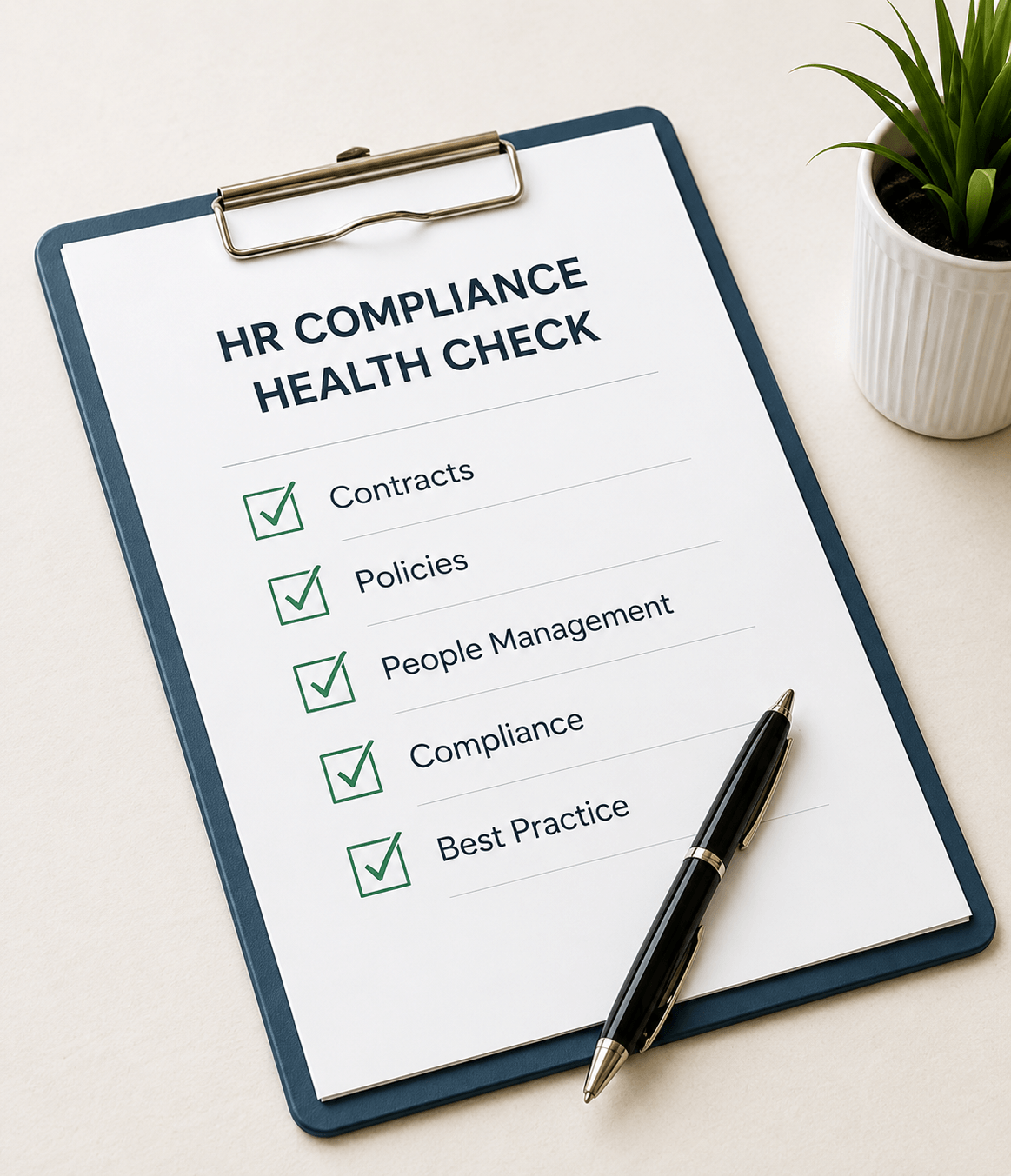
FREE HR COMPLIANCE HEALTHCHECK
How compliant is your business?
Take our free HR Compliance Healthcheck and get a personalised report in minutes.
Identify potential risks, strengthen your HR practices and gain peace of mind knowing you are on track.
Understand your HR strengths and blindspots
Spot gaps and reduce risk
Get clear, practical recommendations
Build a stronger, more compliant business.
Simple HR. Serious Protection.
Practical HR solutions for small and growing businesses.



QUICK LINKS
RESOURCES


People Policy Co. All rights reserved. © 2026