
How to Handle Sexual Harassment Complaints in the Workplace (UK Guide)
Introduction
Handling sexual harassment complaints is one of the most sensitive and high-risk areas of employee relations.
For UK employers, the stakes are significant. Sexual harassment is unlawful under the Equality Act 2010, and recent developments in employment law have increased expectations on employers to take proactive steps to prevent and address inappropriate behaviour.
For SMEs in particular, where processes may be less formalised, the risk often lies not in the complaint itself, but in how it is handled.
A fair, structured, and well-documented approach is essential to:
Protect employees
Maintain trust and culture
Reduce legal and reputational risk
What Constitutes Sexual Harassment?
Under the Equality Act 2010, sexual harassment occurs where unwanted conduct of a sexual nature has the purpose or effect of:
Violating an individual’s dignity
Creating an intimidating, hostile, degrading, humiliating, or offensive environment
This can include:
Verbal comments or jokes
Physical behaviour
Non-verbal conduct such as messages or images
It is important to recognise that intent is not the determining factor. The impact on the individual is key.
The Employer’s Legal Responsibilities
Employers have a duty to:
Prevent harassment in the workplace
Take complaints seriously
Act reasonably in response to concerns
Follow a fair and consistent process
Failure to do so can lead to claims of:
Harassment
Constructive dismissal
Victimisation
Whistleblowing detriment (in certain cases)
Employers may also be held vicariously liable for the actions of employees unless they can demonstrate that reasonable steps were taken to prevent the behaviour.
Why Handling Complaints Correctly Matters
Even where inappropriate behaviour has occurred, poor handling of the complaint can significantly increase risk.
Common consequences include:
Escalation of the issue
Loss of trust within the team
Increased likelihood of formal claims
Reputational damage
In many tribunal cases, the employer’s response is scrutinised as closely as the original allegation.
A Practical Step-by-Step Process
1. Take the Complaint Seriously from the Outset
Regardless of how the complaint is raised, it should be:
Acknowledged promptly
Treated as potentially formal
Documented from the start
Avoid making assumptions about the seriousness of the issue.
2. Ensure Confidentiality (Where Possible)
Complaints should be handled sensitively.
Limit information to those who need to know
Avoid informal discussions or speculation
Reassure the employee that the matter will be handled appropriately
Complete confidentiality cannot always be guaranteed, particularly where an investigation is required, but discretion is critical.
3. Conduct a Fair and Objective Investigation
An investigation should:
Establish the facts
Gather evidence
Include interviews with relevant individuals
The investigator should be impartial and, where possible, not directly involved in the situation.
4. Follow a Structured Grievance or Disciplinary Process
Depending on the circumstances:
The complaint may be handled under the grievance procedure
If there is evidence of misconduct, a disciplinary process may follow
Ensure alignment with the ACAS Code of Practice.
5. Allow All Parties to Respond
Both the individual raising the complaint and the person accused should:
Be given the opportunity to provide their account
Be treated fairly and without bias
Avoid predetermined outcomes.
6. Make a Reasoned and Proportionate Decision
Outcomes should be:
Based on evidence
Clearly documented
Proportionate to the findings
Possible outcomes may include:
No further action
Informal resolution
Formal disciplinary action
7. Communicate the Outcome Appropriately
While maintaining confidentiality:
Inform the complainant that the issue has been addressed
Provide appropriate reassurance
Avoid disclosing unnecessary details
8. Offer the Right to Appeal
Employees should have the opportunity to appeal the outcome if they are dissatisfied.
Common Mistakes Employers Make
Handling Complaints Informally Without Documentation
This creates significant risk if the issue escalates.
Failing to Act Promptly
Delays can undermine trust and weaken the employer’s position.
Minimising the Issue
Assuming behaviour is “banter” or not serious enough can lead to claims.
Lack of Manager Confidence or Training
Managers may avoid dealing with complaints due to discomfort or uncertainty.
Inconsistent Handling of Similar Cases
This can lead to claims of unfairness or discrimination.
The Importance of Prevention
Handling complaints effectively is only one part of the employer’s responsibility.
Preventative measures are equally important:
Clear anti-harassment policies
Regular communication of expected standards
Manager training
A culture where concerns can be raised safely
Taking proactive steps can significantly reduce the likelihood of issues arising.
Example Scenario
An employee raises concerns about inappropriate comments made by a colleague.
The manager dismisses the issue as informal workplace behaviour and does not escalate or document the complaint.
The behaviour continues, and the employee later raises a formal grievance.
The employer is unable to demonstrate that reasonable steps were taken to address the issue early, increasing the risk of a claim.
Key Takeaway
Handling sexual harassment complaints requires:
A structured process
Objectivity
Sensitivity
Clear documentation
Employers who approach these situations informally or inconsistently expose themselves to significant legal and reputational risk.
Other Related Articles
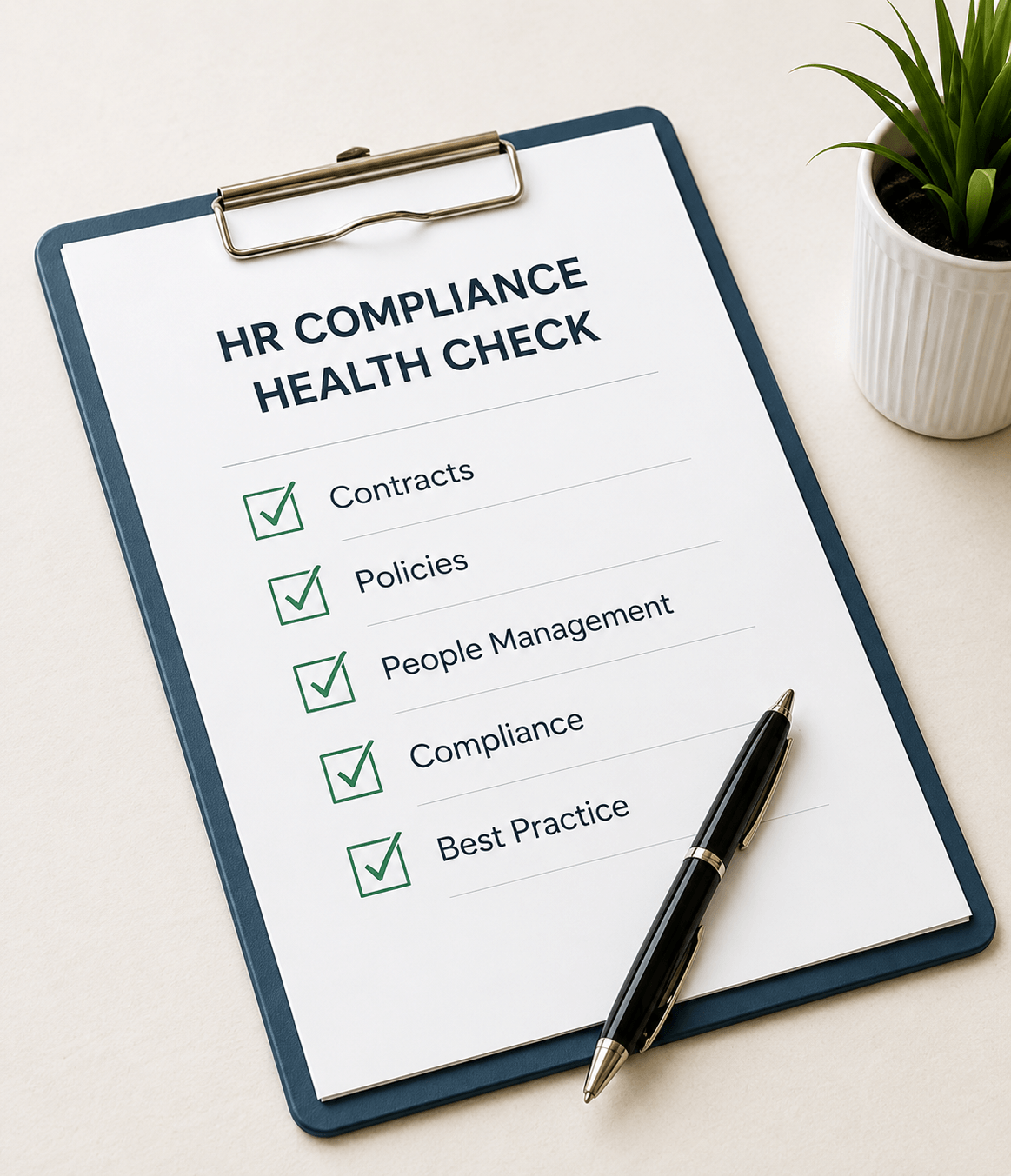
FREE HR COMPLIANCE HEALTHCHECK
How compliant is your business?
Take our free HR Compliance Healthcheck and get a personalised report in minutes.
Identify potential risks, strengthen your HR practices and gain peace of mind knowing you are on track.
Understand your HR strengths and blindspots
Spot gaps and reduce risk
Get clear, practical recommendations
Build a stronger, more compliant business.

Simple HR. Serious Protection.
Practical HR solutions for small and growing businesses.



QUICK LINKS
RESOURCES



People Policy Co. All rights reserved. © 2026