
Essential HR Policies Every UK SME Needs in 2026 | Free Compliance Scorecard
Introduction
One of the most common risks within SMEs is not a lack of intent to comply, but a lack of structured HR documentation.
Many businesses operate with either no formal policies or a collection of outdated templates that are not aligned to current employment law or practical business needs.
With increasing legal expectations and changes to employee rights, having the right policies in place is no longer optional. It is a fundamental part of managing risk and ensuring consistency.
Are HR Policies Legally Required?
In the UK, there is no single requirement to have a full suite of HR policies. However, employers are required to:
Provide a written statement of employment particulars
Comply with employment law principles, including fairness and consistency
Follow ACAS guidance when managing disciplinary and grievance issues
In practice, this means that while policies themselves may not be explicitly mandated, the standards they support effectively are.
The Core Policies Every SME Should Have
At a minimum, employers should have the following:
Disciplinary Policy
Defines how conduct issues are managed and ensures alignment with the ACAS Code of Practice.
Grievance Policy
Provides a structured process for employees to raise concerns and ensures these are handled fairly.
Absence Management Policy
Outlines reporting requirements, sick pay, and how absence is managed.
Equality, Diversity and Dignity at Work Policy
Supports compliance with the Equality Act and sets behavioural expectations.
Data Protection Policy
Ensures compliance with UK GDPR and outlines how employee data is handled.
Why Policies Matter in Practice
Policies serve three key purposes:
1. Consistency
They ensure that similar situations are handled in the same way.
2. Clarity
Employees understand expectations, processes, and standards.
3. Protection
They provide a framework that supports fair decision making and reduces legal risk.
Without policies, decisions can appear arbitrary, even where the intent is reasonable.
Common Mistakes SMEs Make
Downloading generic templates that are not tailored
Having policies that exist but are not followed
Failing to update policies in line with legal changes
Not communicating policies to employees
A policy that is not implemented or understood provides little protection.
Practical Steps to Get This Right
Conduct a review of existing policies
Remove outdated or duplicated documents
Ensure policies are written clearly and practically
Communicate policies to employees
Train managers on how to apply them
Key Takeaway
HR policies are not simply documents. They are the foundation of a consistent and compliant approach to managing employees.
Without them, even well-intentioned decisions can create risk.
Other Related Articles
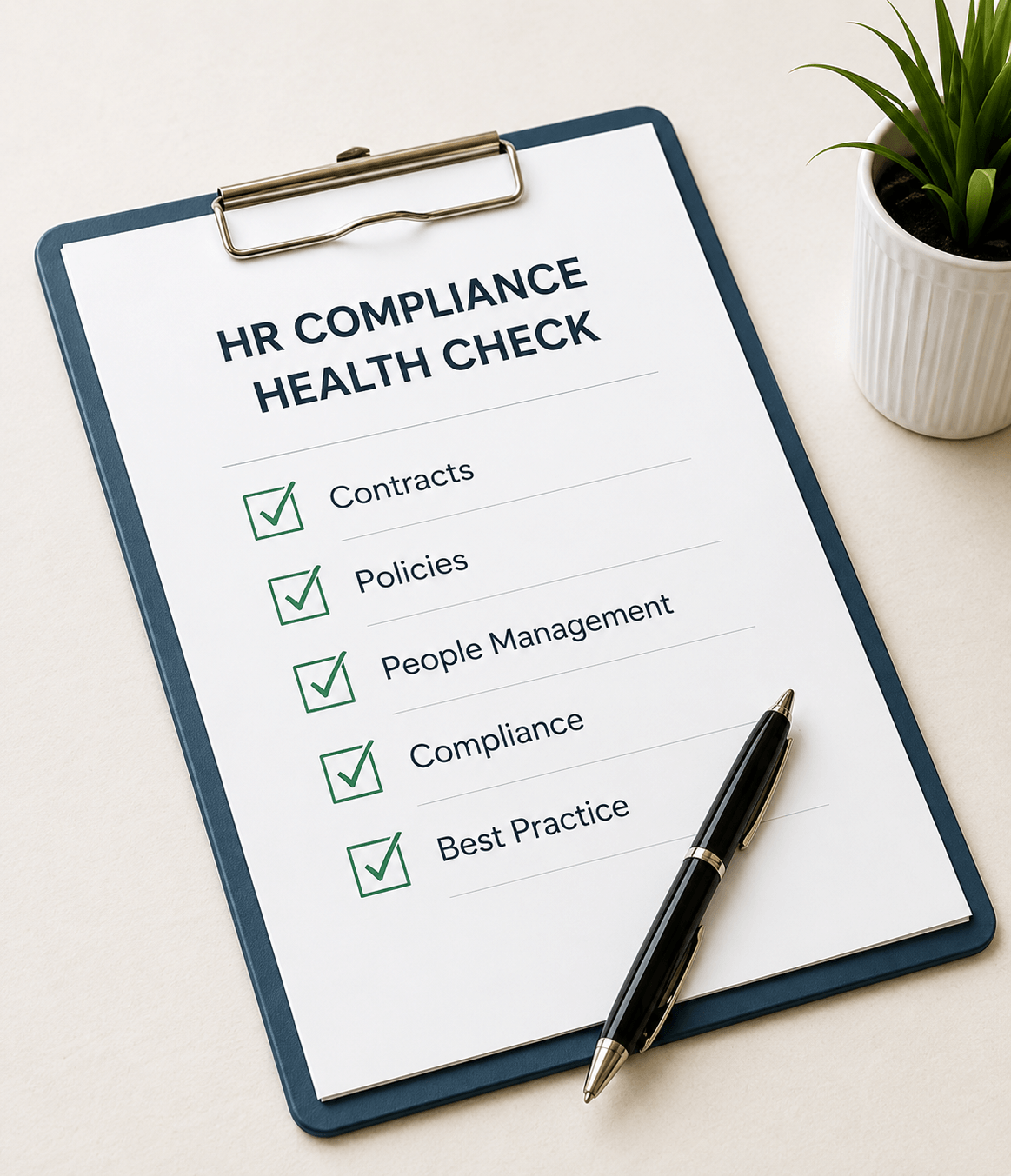
FREE HR COMPLIANCE HEALTHCHECK
How compliant is your business?
Take our free HR Compliance Healthcheck and get a personalised report in minutes.
Identify potential risks, strengthen your HR practices and gain peace of mind knowing you are on track.
Understand your HR strengths and blindspots
Spot gaps and reduce risk
Get clear, practical recommendations
Build a stronger, more compliant business.

Simple HR. Serious Protection.
Practical HR solutions for small and growing businesses.



QUICK LINKS
RESOURCES



People Policy Co. All rights reserved. © 2026