Do Small Businesses Legally Need HR Policies?
Introduction
A common question among small business owners is whether HR policies are legally required.
While not all policies are mandatory, the absence of structured documentation can create significant legal and operational risks.
Are HR Policies a Legal Requirement?
In the UK, employers are required to provide certain written terms, such as:
Employment contracts
Written statement of particulars
However, most HR policies are not strictly required by law.
Why Policies Still Matter?
Although not always legally required, policies are critical in demonstrating:
Consistency in decision-making
Fair treatment of employees
Compliance with employment law principles
In the absence of policies, employers may struggle to defend decisions in disputes.
Key Policies Every SME Should Have
At a minimum, businesses should have:
Disciplinary Policy
Grievance Policy
Absence Management Policy
Equality and Dignity at Work Policy
Data Protection Policy
These form the foundation of a compliant HR framework.
Risks of Not Having Policies
Without clear policies:
Decisions may appear inconsistent
Managers may act without guidance
Processes may not meet ACAS standards
Legal risk increases significantly
Example Risk Scenario
An employee raises a grievance, but the business has no formal process.
The issue is handled informally and inconsistently, leading to dissatisfaction and escalation.
This can increase the likelihood of disputes or claims.
Conclusion
While not all policies are legally required, they are essential for protecting your business and ensuring fair and consistent employee management.
Other Related Articles
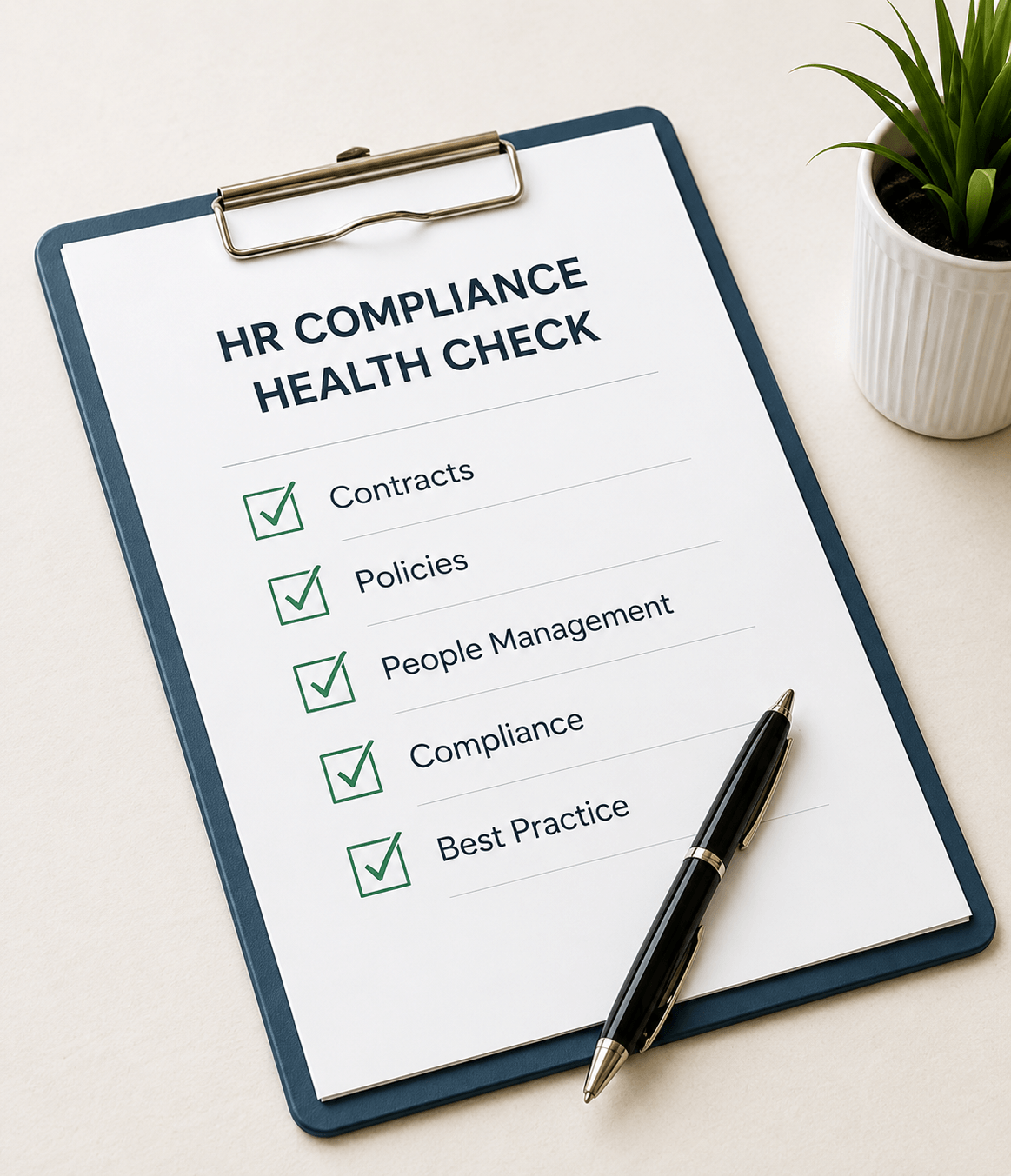
FREE HR COMPLIANCE HEALTHCHECK
How compliant is your business?
Take our free HR Compliance Healthcheck and get a personalised report in minutes.
Identify potential risks, strengthen your HR practices and gain peace of mind knowing you are on track.
Understand your HR strengths and blindspots
Spot gaps and reduce risk
Get clear, practical recommendations
Build a stronger, more compliant business.
Simple HR. Serious Protection.
Practical HR solutions for small and growing businesses.



QUICK LINKS
RESOURCES



People Policy Co. All rights reserved. © 2026